Original Exhibition Catalogue for Violence! In Recent American Art 19681969 Mca Chicago
Violence! in Contempo American Art
Featured Images
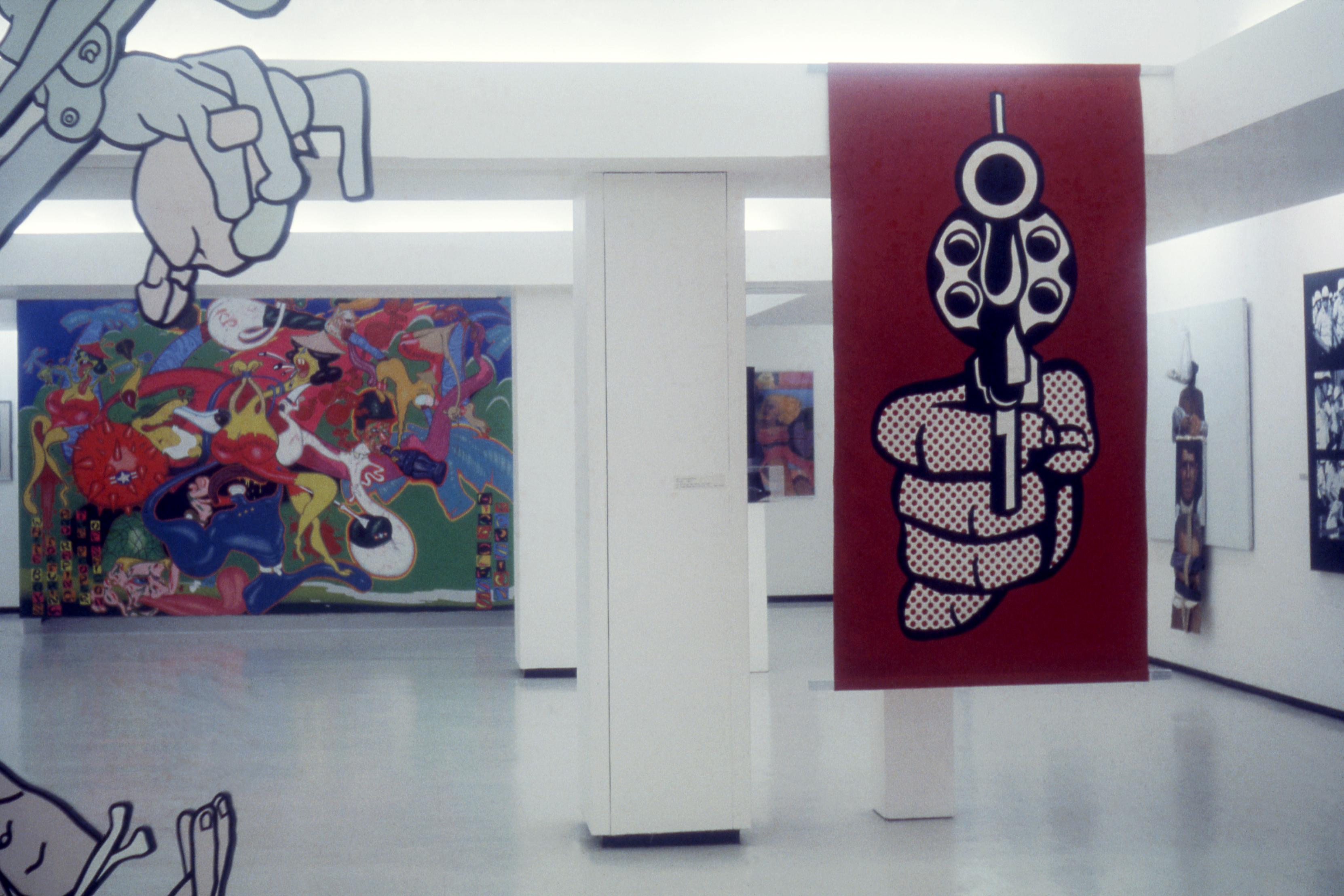
Installation view, Violence! In Recent American Fine art, MCA Chicago
Photo © MCA Chicago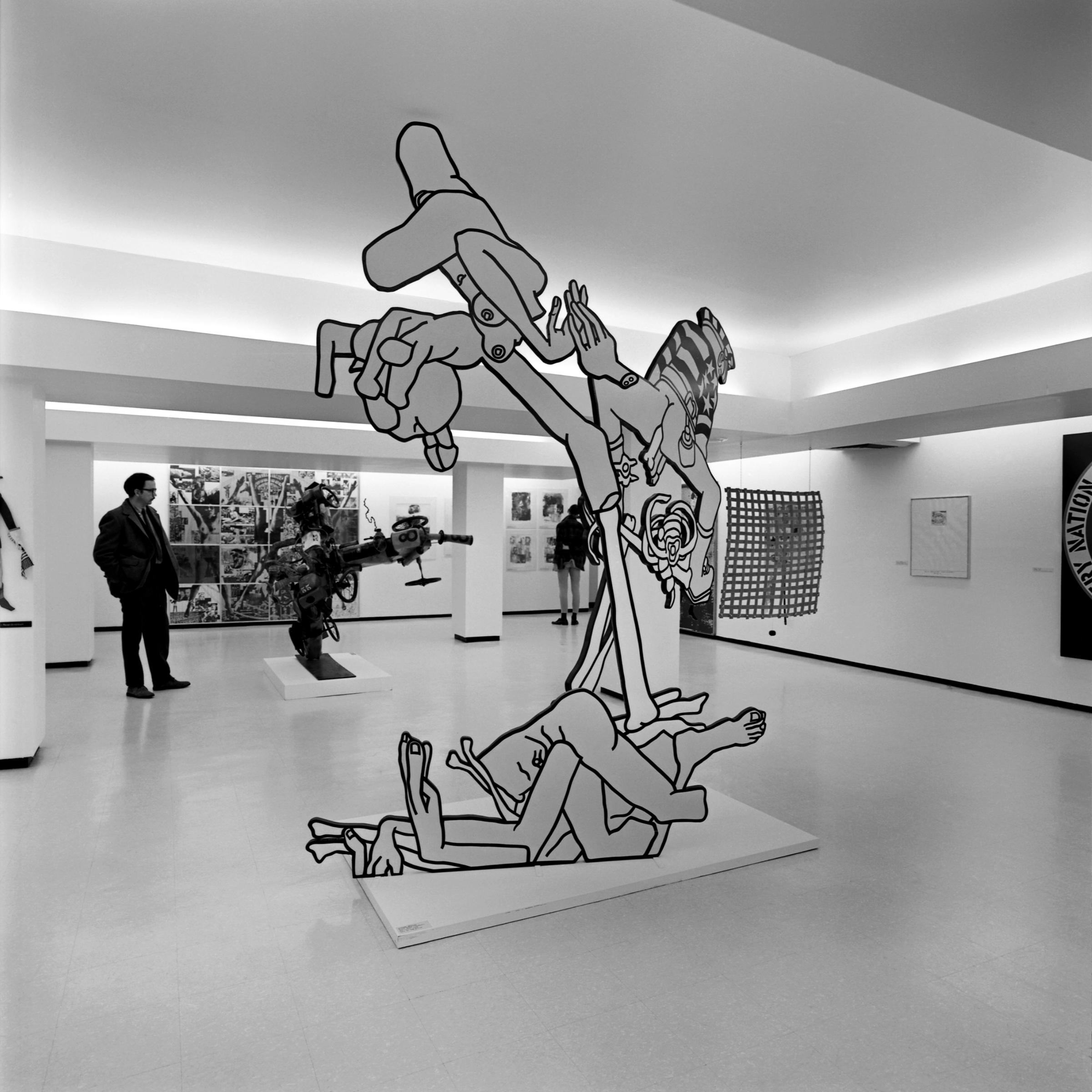
Installation view, Violence! In Recent American Art, MCA Chicago
Photograph © MCA Chicago
Installation view, Violence! In Recent American Art, MCA Chicago
Photo © MCA Chicago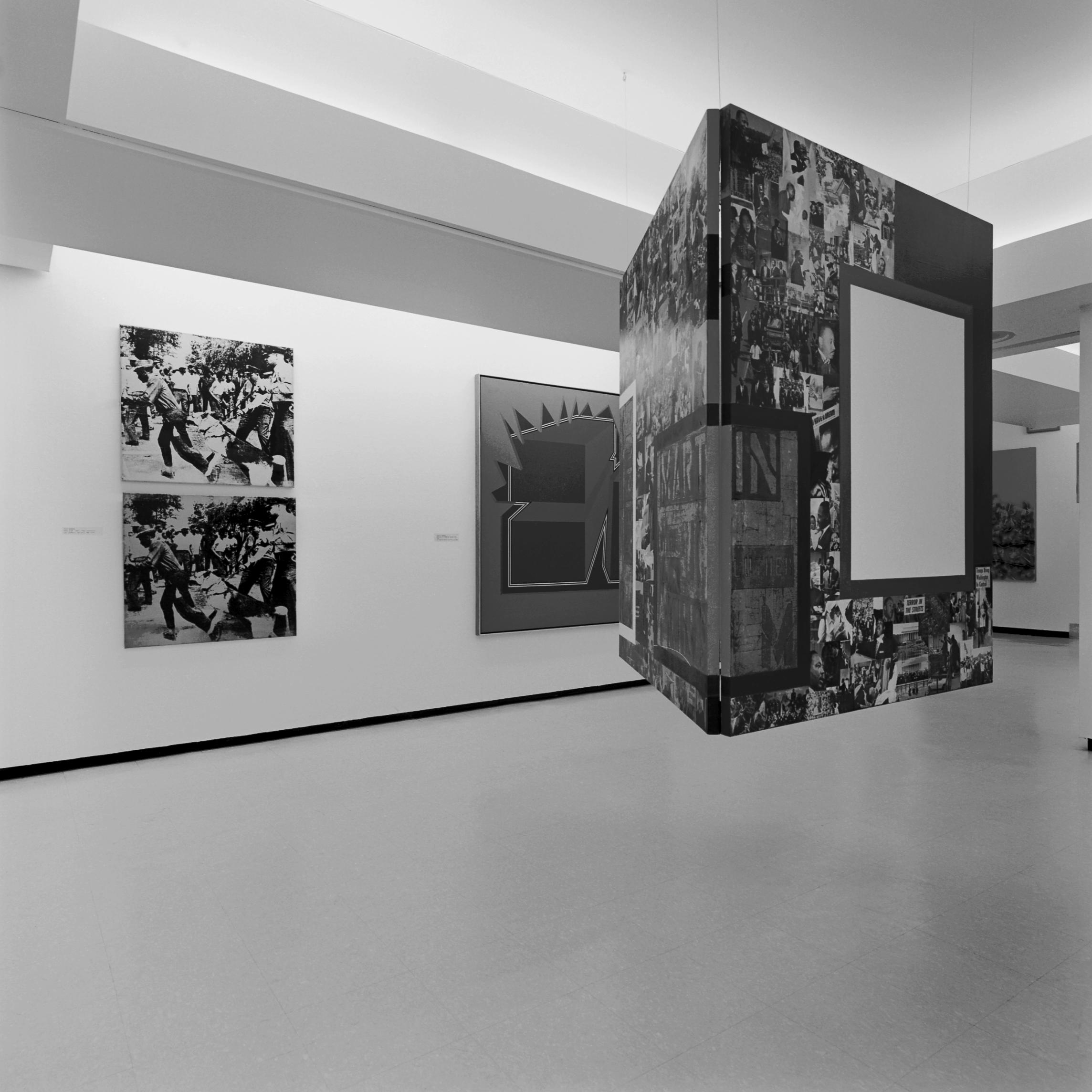
Installation view, Violence! In Recent American Art, MCA Chicago
Photo © MCA Chicago
Installation view, Violence! In Recent American Art, MCA Chicago
Photo © MCA Chicago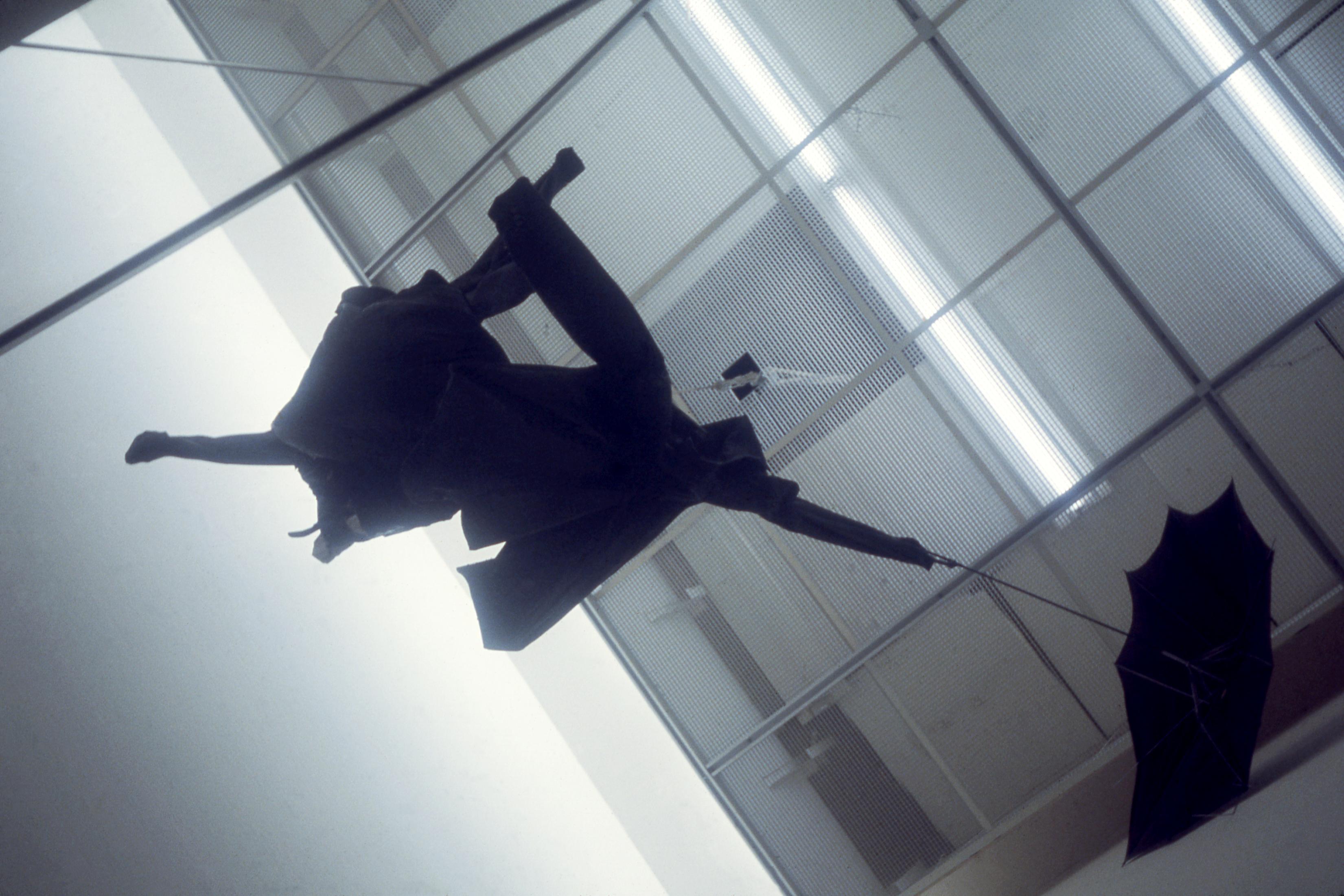
Installation view, Violence! In Recent American Fine art, MCA Chicago
Photo © MCA ChicagoNigh the Exhibition
Confronting a properties of social instability caused by the ongoing war in Vietnam, the unprecedented violence of Chicago'due south 1968 Democratic National Convention {bio: (DNC), and the assassinations of Martin Luther King Jr. and Senator Robert F. Kennedy, the MCA opened the exhibition Violence! in Recent American Art, which featured works that interrogated the tense sociopolitical atmosphere and the influence of violence in the U.s.a.. Later on reading the heated article "The Outcome of American Violence on American Art" past curator of the Illinois Bell Phone Company'southward corporate collection Robert "Robin" Glauber in the local North Side newspaper Skyline, MCA director Jan van der Marck asked him to curate an exhibition of work addressing the subject area. In a radical deviation from other exhibitions in the MCA's early history, which were less politically explicit, this collection of representational art commented on themes of racial violence, imbalances in political ability, and the overwhelming influence of mass media. Violence! exhibited a varied collection of photo-assemblages, paintings, print media, and sculptural work by Chicago-based artists, political activists with artistic practices, and now-canonical figures of American contemporary fine art.
The catalogue for Violence! was produced on newsprint, giving it the appearance of an edition of Skyline, and sold for 10¢ at the exhibition. The forepart page displayed bodily headlines from 1964–69, such as "Armed Negroes Fight the Constabulary in Chicago Riots," referring to a July 1968 race anarchism following King'due south assassination, and "37 Who Saw Murder Didn't Call Police," which documented the infamous 1964 murder of Kitty Genovese in Queens, New York. It also included an incendiary essay by Glauber, who wrote, "Virtually Americans at present admit that the Us maintains a level of violence and tolerance of that violence unmatched anywhere in the earth." Organized by Glauber into categories such as war, racial, personal, gun, and psychological violence, the featured works addressed various forms of violence and their influence in a wide assortment of social, political, and racial contexts.
Violence! presented work from iconic artists from and pre-dating the American popular fine art movement, such as Andy Warhol's (American, 1928–87) screen print Elvis Two (1964)}, depicting the musician in a cowboy outfit pointing a revolver at viewers, and the related Roy Lichtenstein (American, 1923–97) workPistol, which features a reproduced comic-volume image of a hand belongings a gun on a red felt banner. While these pieces critique pop culture and its relationship to violence in a more generalized fashion, other pieces at the show dealt with politically charged subject matter. Some works addressed political critique with a sense of light-hearted parody, such as Ellen Lanyon's (American, 1926–2013) self-explanatory 50.B.J. Doll
Other works addressed even more charged sociopolitical problems, such as state violence and the racist ideology that fuels information technology. Hailing from his noted "Decease in America" series of screen prints, the two versions of Warhol'south Race Riot
collinssaisards1959.blogspot.com
Source: https://mcachicago.org/Exhibitions/1968/Violence-In-Recent-American-Art
0 Response to "Original Exhibition Catalogue for Violence! In Recent American Art 19681969 Mca Chicago"
Post a Comment